






Recession Over: Economic Upswing Expected for Austria in 2026

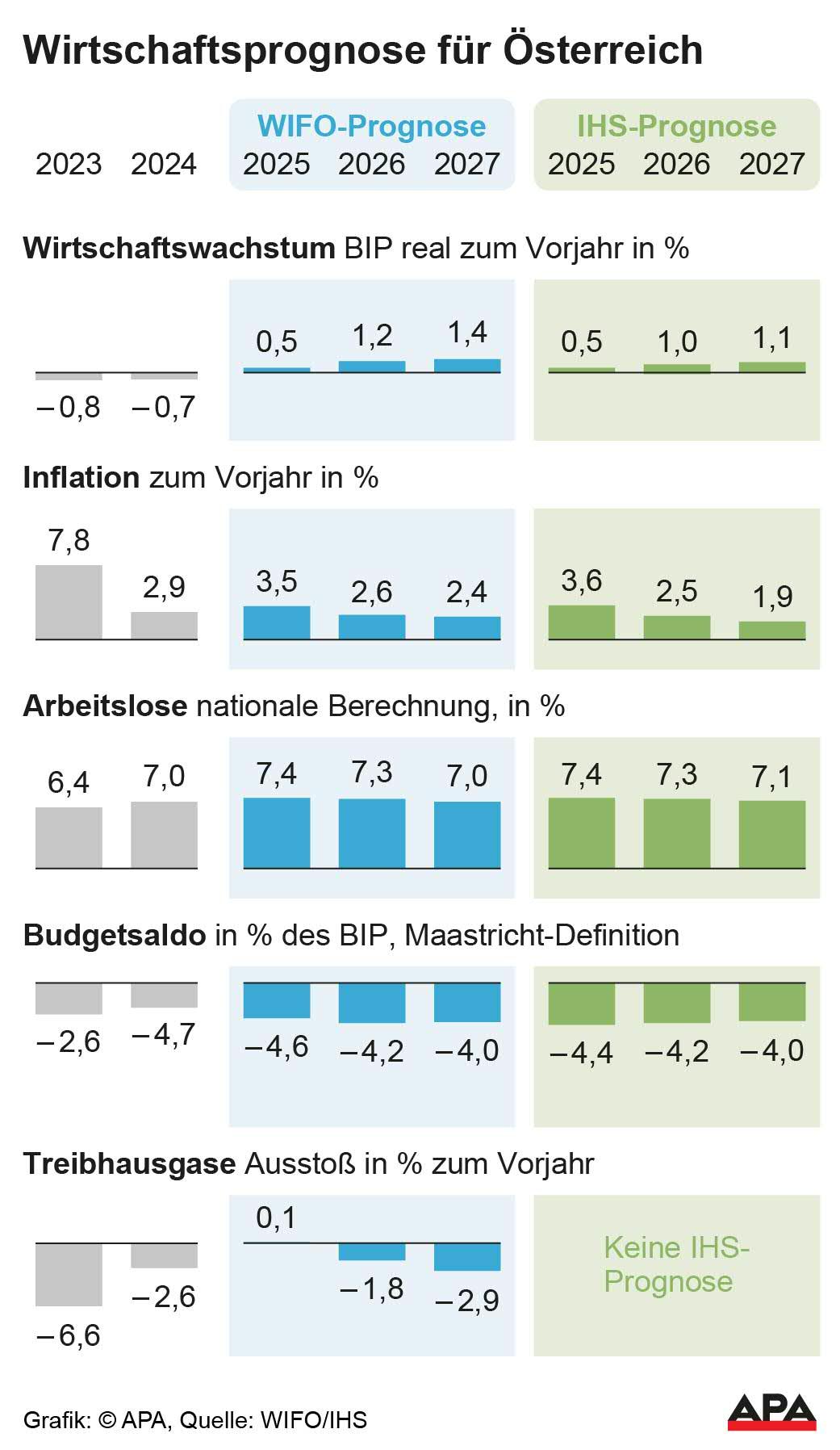
Rising investments and higher government consumption have supported Austria's economy this year. Wifo and IHS slightly increased their economic forecast for the current year and 2026 on Thursday. The gross domestic product (GDP) is expected to grow by 0.5 percent this year and by 1.2 and 1.0 percent in the coming year. In October, economists expected economic growth of 0.3 (Wifo) and 0.4 percent (IHS) for 2025 and 1.1 and 0.9 percent for 2026.
Austria's Economy Grows by 0.5 Percent This Year
For Austria's economy, there is "a light at the end of the tunnel," said Wifo Director Gabriel Felbermayr at the presentation of the economic forecast in Vienna. The recession of 2023 and 2024 was the longest economic downturn of the Second Republic. For 2026 and 2027, Felbermayr expects "no stormy upswing," but growth slightly above the average of the Eurozone.
IHS Director Holger Bonin warned against too much optimism at the press conference. "The current economic recovery is on shaky ground." Bonin pointed to the continued challenging situation for the Austrian export industry and the strained public finances. The changes in US security policy will also cost Europe "considerable resources." Austria must also prepare for higher security expenditures.
Weak Recovery Phase 2026/27
For 2027, Wifo and IHS forecast economic growth in Austria of 1.4 and 1.1 percent, respectively. "Due to a loss of international competitiveness and protectionist tendencies in global trade, the pace of economic recovery is likely to lag behind previous recovery phases," write the IHS economists in their economic forecast.
According to the Wifo forecast, the Austrian industry is expected to have "passed the low point at the end of 2025." Domestic exports and industrial gross value added are expected to rise again next year "in the wake of the global economy." From 2023 to 2025, exports were declining. US import tariffs, trade policy uncertainty, and the weakness of the German industry are weighing on Austria's export economy. Both institutes do not expect major economic impulses from private household consumption. Inflation and low wage settlements would dampen consumption.
Inflation Will Noticeably Decrease in 2026
There is good news regarding inflation: It is expected to decrease from 3.5 percent (Wifo) and 3.6 percent (IHS) this year to 2.6 and 2.5 percent next year. At the beginning of 2026, the base effect of the energy price increase from January 2025 will disappear, causing the inflation rate to drop by up to 1 percentage point, explained Wifo.
The weak economic development in recent years has noticeably impacted the labor market. The national unemployment rate rose from 6.3 percent in 2022 to 7.4 percent in 2025. Next year, Wifo and IHS expect a slight decrease in the unemployment rate to 7.3 percent. In 2027, the unemployment rate is expected to further decrease to 7.0 and 7.1 percent, respectively.
Budget Deficit Estimated at 4.6 and 4.4 Percent in 2025
The economists at Wifo and IHS forecast a general government budget deficit in Austria of 4.6 and 4.4 percent of the gross domestic product (GDP) for this year. As a result of budget consolidation, both institutes expect a deficit of 4.2 percent next year and 4.0 percent in 2027. The Fiscal Council recently arrived at similar budget figures.
This means that the combined budget deficit of the federal government, states, municipalities, and social security institutions is still significantly above the Maastricht threshold of 3 percent. For comparison: In 2024, the domestic deficit was 4.7 percent. In July, the initiation of an EU deficit procedure against Austria was officially decided.
Higher Budget Deficit for States and Municipalities
The currently available data suggests that the budget development at the federal level is "slightly better than planned," while the deficits at the state and municipal levels "are likely to be higher," writes the Institute for Advanced Studies (IHS) in its economic forecast.
Wifo also pointed to "the continued strong growth in expenditures" of the federal states and municipalities. In addition to the obligations under the Future Fund, demographic challenges in the areas of health, care, and elementary education are driving the expenditure dynamics. In terms of public revenues, "the subdued development of private consumption" dampens the value-added tax revenue, according to Wifo economists. However, the suspension of the compensation for the last third of the cold progression and the strong increase in the maximum assessment base ensure "robust growth" of wage-related taxes.
National Debt Rises to Nearly 80 Percent
According to the Wifo forecast, Austrian national debt is expected to rise from nearly 80 percent of economic output in 2024 to nearly 85 percent in 2027.
(APA/Red)
This article has been automatically translated, read the original article here.